
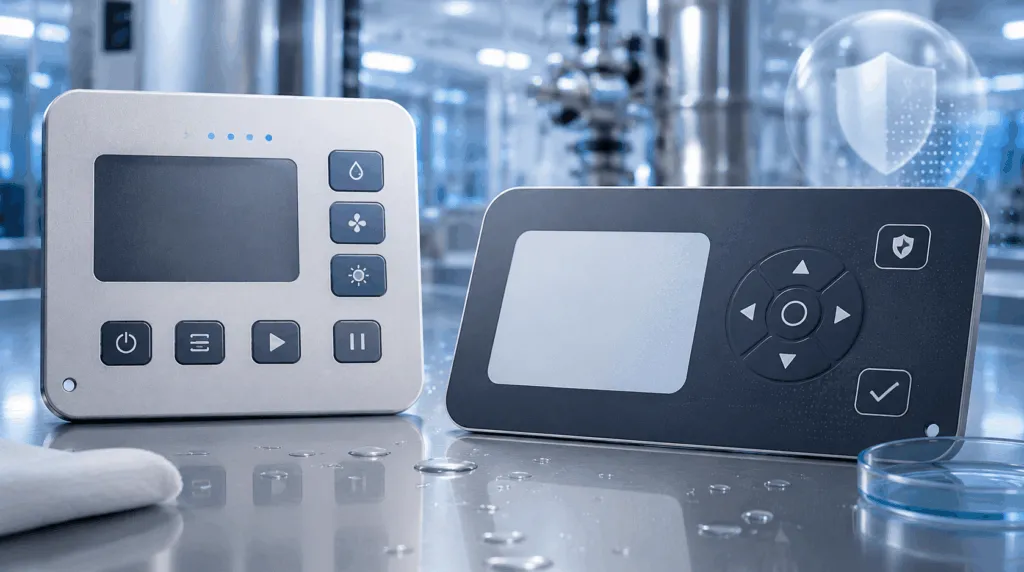
Every surface a clinician touches during patient care is a potential vector for cross-contamination — and the control panel of a medical device is touched more often than almost anything else in the room.
As infection control standards tighten across hospitals and clinics, antimicrobial membrane keypads have moved from a “nice-to-have” feature to a baseline expectation for medical device interfaces.
Key Takeaways
Conventional mechanical switches and buttons create small gaps around moving parts — recesses that resist standard cleaning and can turn a control panel into a reservoir for biological contaminants. In clinical environments where devices are handled by multiple staff members across shifts, and where cleaning regimes involve strong chemical agents, this design flaw carries real infection-control consequences.
Membrane keypads address the problem structurally rather than cosmetically. A one-piece graphic overlay provides a genuinely flat, seamless surface with no physical traps for fluid or bacteria, and when the assembly includes a proper perimeter seal, contamination is confined to the external surface rather than penetrating the interior of the device.
This single design characteristic — sealing the component against liquid ingress — is widely cited as one of the most significant hygiene advantages membrane keypads offer over legacy mechanical interfaces.
An antibacterial membrane switch goes a step further than a simply sealed surface. It incorporates an antimicrobial-treated top film — typically a polyester substrate coated with micro-agents designed to actively disrupt bacterial growth on contact, rather than relying solely on periodic cleaning to control surface bioburden. This technology works continuously between cleaning cycles, providing a layer of protection that supplements, rather than replaces, standard disinfection protocols.
Material selection matters here as much as the coating itself. While standard polycarbonate is common in consumer electronics, it can crack and yellow under the sustained exposure to isopropyl alcohol and bleach solutions typical of hospital cleaning regimes.
Heat-stabilised, high-performance polyester is generally the preferred substrate for medical graphic overlays specifically because of its superior chemical resistance and mechanical durability under these conditions.
When an antimicrobial-treated polyester film is combined with high-quality perimeter gaskets, the complete keypad assembly can achieve Ingress Protection ratings such as IP65 or IP67 — sealing internal electronic circuits against moisture during intensive spray-cleaning cycles, which are standard practice in many clinical settings.
Hygiene isn’t the only reason membrane keypads suit medical devices — usability under real clinical conditions matters just as much. A clinician adjusting an infusion pump or monitoring a ventilator often cannot look directly at the control panel to confirm an input, and thick surgical gloves reduce the sensitivity that touchscreens rely on for feedback.
Custom embossing solves this by creating physical shapes that guide the operator’s fingers without requiring visual confirmation:
Beneath these embossed keys, metal or polyformed domes provide a sharp, physical “click” that confirms activation even through layers of gloves — a form of feedback touchscreens generally cannot replicate as reliably, and at a lower cost than capacitive alternatives.
Protecting the printed graphics themselves is equally important in a clinical setting, since worn-off instructional text or warning symbols create a genuine safety risk. Sub-surface printing — applying inks to the underside of the transparent top film rather than the surface — shields the graphics from both physical abrasion and chemical exposure, keeping labels legible for well over a million operating cycles.
Medical interfaces must remain legible across widely varying lighting conditions: bright surgical suites, dim radiology rooms, and hospital wards at night. Thin, surface-mounted LEDs or Light Guide Film (LGF) technology integrate backlighting directly into the membrane keypad without adding mechanical bulk, distributing light evenly across the panel and reducing hot spots.
A particularly useful technique for complex medical panels is “dead-fronting,” or secret-until-lit graphics, where warning indicators remain invisible until their background LED activates — keeping the interface visually clean during routine operation while ensuring critical alerts are unmistakable when they matter.
Beyond hygiene and usability, membrane keypads align well with the regulatory realities of medical device manufacturing. Polyester substrates, adhesives, and inks used in membrane keypad construction can be readily sourced to meet RoHS (Restriction of Hazardous Substances) requirements, and reputable manufacturers maintain full batch traceability across raw materials and production steps — a practical necessity for medical device supply chains subject to regulatory audit.
Reliability over time is just as important as day-one performance. Polyester-based membrane keypads are well known for sustaining over one million switching cycles, giving device manufacturers confidence that hygiene-focused design doesn’t come at the expense of long-term mechanical durability.
No. Antimicrobial films continuously inhibit bacterial growth on the surface between cleanings, but they supplement — rather than replace — standard hospital disinfection protocols using isopropyl alcohol, bleach, or other approved agents.
Both can be designed with sealed, wipeable surfaces, but membrane keypads offer tactile feedback that touchscreens lack, which matters for gloved or eyes-off operation. The right choice often depends on the specific device’s interaction requirements alongside hygiene needs.
IP65 or IP67 is common for devices undergoing regular spray-cleaning or washdown cycles, though the appropriate rating depends on the specific cleaning regime and clinical environment the device will operate in.
Polyester generally offers superior resistance to the harsh chemical agents used in hospital disinfection — polycarbonate is more prone to cracking and yellowing under sustained exposure to isopropyl alcohol and bleach.
As infection control expectations tighten across healthcare settings, antimicrobial membrane keypads have become the practical baseline for medical device interfaces — combining a sealed, hygienic surface with the tactile reliability clinicians depend on in fast-paced, gloved-hand environments. Getting the specification right means balancing antimicrobial film technology, chemical-resistant substrates, IP-rated sealing, and embossed tactile design from the earliest stages of product development.
Scrint Technology has manufactured membrane switches and graphic overlay membranes for medical and industrial applications since 1993. Our recent work on membrane switch solutions for medical device manufacturers covers durability, chemical resistance, and hygienic design in more depth. Contact us to discuss antimicrobial and IP-rated keypad specifications for your next medical device project.